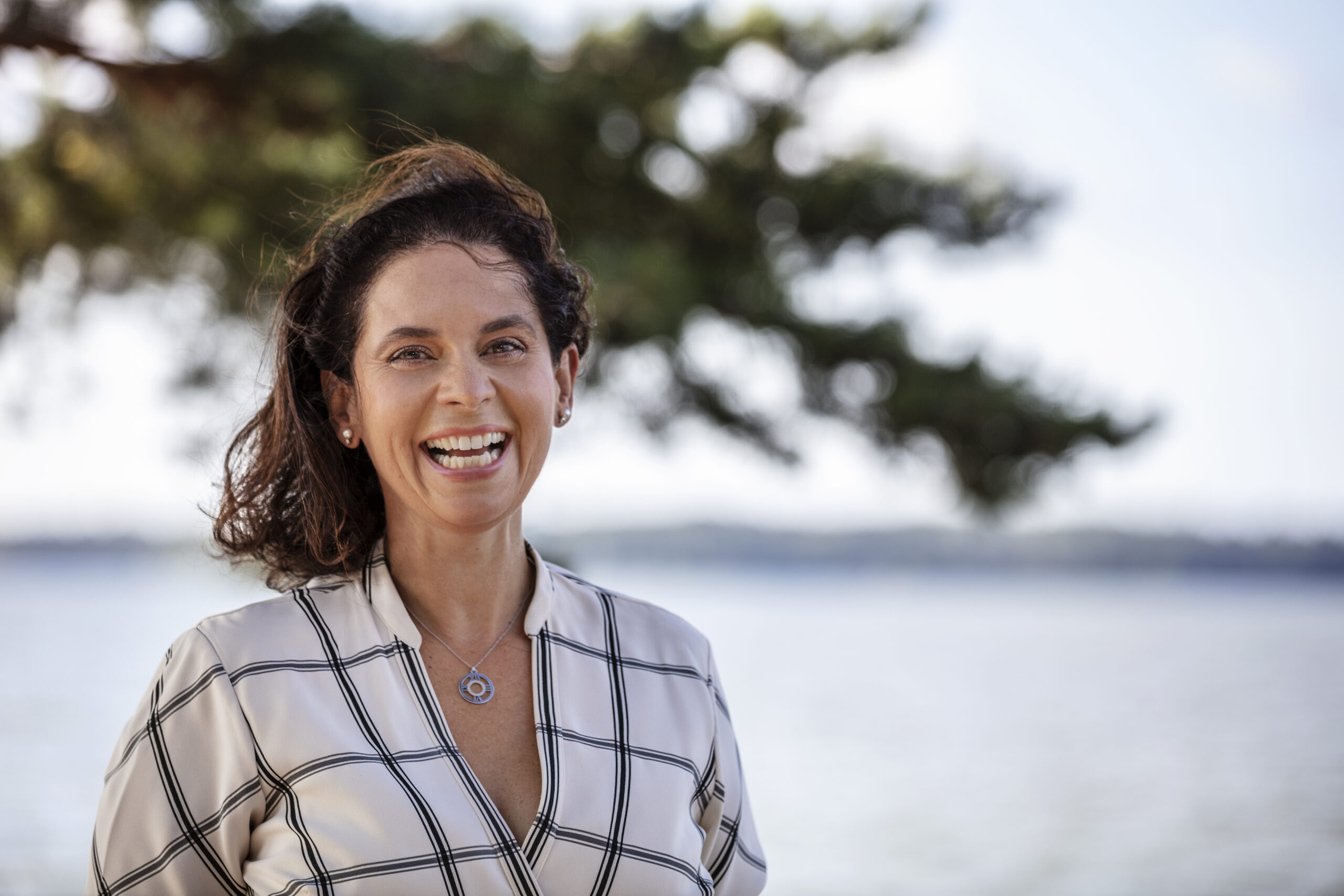
In our latest episode of ‘People & Purpose’, host Tarja Takko engaged in an inspiring conversation with Laura Vargas, a purpose-driven leader whose work connects profit, sustainability, and human-centered values. Drawing from her roots in Costa Rica -a country globally recognized for its environmental stewardship- Laura offered a compelling vision for how leaders and organizations can integrate purpose into every decision they make.
The intersection of profit and purpose
Laura began by highlighting the shift from a purely profit-focused mindset to one where purpose takes a central role in business strategy. Purpose, she explained, should not be an afterthought or a separate CSR initiative; it should be embedded into the very core of how an organization operates. “I would hope that leaders create a clarity on their own purpose and how what they’re doing drives them to that purpose,” she emphasized.
She stressed that leadership is not only about financial results but about generating positive impact for people and the planet. Boards and governance structures have a critical responsibility here, ensuring that organizations balance short-term gains with long-term regenerative leadership.
Lessons from Costa Rica: Sustainability in action
Costa Rica, despite its small size, is home to nearly 6% of the world’s biodiversity. This unique environment fosters a deep cultural responsibility toward environmental protection and social well-being. Laura explained how this ethos influences her own leadership approach prioritizing harmony between economic progress and ecological preservation.
This model, she argued, offers valuable lessons for organizations everywhere: sustainability isn’t just an environmental commitment; it’s a business advantage that strengthens trust, resilience, and innovation.
Helping seasoned leaders find their ‘aha’ moment
For leaders who have been operating in the same way for decades, embracing a purpose-led model can require a mindset shift. Laura described the importance of guiding these leaders toward an ‘aha’ moment where they recognize that integrating purpose is not a soft ideal but a strategic necessity. “The leaders who have been leading the way they have always led, which is not maybe purpose-driven. How do you help those leaders to have that aha moment that yes, it really needs to change?” asked Tarja.
By connecting the dots between personal fulfillment, organizational performance, and societal benefit, leaders can begin to see purpose as a natural evolution of their work. “Well, one of the things to do here is to recognize that what we’re doing cannot continue. Our present has become unsustainable. So we’ve got to do something different. Instead of letting fear take over our systems, our cognitive systems, let’s think about optimism and hope and think what can I do better? And from a very practical perspective is to understand how my purpose helps save the planet. For example, at an individual level and at a corporate level, how are we working together to save, to lead and save our planet? And in that way, I think it will help us reorient our leadership and really go way beyond just profit. I mean, profits are great, but it’s just too small a metric, it’s too shallow, it’s too insignificant for what we really need to be doing. I would hope that leaders create a clarity on their own purpose and how what they’re doing drives them to that purpose,” Laura explains.
The power of alignment: Personal and corporate values
One of the strongest themes of the conversation was alignment. When an individual’s personal mission resonates with their company’s goals, the results are transformative. Employees bring more energy, creativity, and ownership to their work when they feel part of a shared mission.
“You will see that the people who grow and shine the most are those who have an aligned personal purpose and an aligned corporate purpose.” Laura encouraged both leaders and organizations to regularly reflect on their purpose, making sure it evolves with changing realities while staying anchored in core values.
Practical steps for leading with purpose
Purpose-driven leadership isn’t abstract. It can be built into daily operations. “What is one action people can take this week, today, now, to begin leading with more purpose?” Tarja asked insightfully. And, Laura shared actionable ways to embed purpose into organizational life:
- Purpose-Driven Meetings: Include a purpose statement in meeting agendas and evaluate whether each discussion is moving the organization closer to its goals.
- Impact Measurement: Integrate impact reviews into leadership programs to assess both tangible and intangible benefits of purpose-driven initiatives.
- Small Daily Actions: Begin with one action today that reflects your personal and organizational values.
A personal source of fulfillment
For Laura, the integration of purpose into her work is what makes it truly meaningful.
“I have the absolute best job in the world. You know, I would really not change my job at all. It is amazing to wake up every day and know that what I’m doing today is helping somebody grow and shine.” Her passion illustrates that purpose is not just a leadership tool. It is a source of personal joy and sustained motivation.
Leadership beyond titles
The conversation closed with a reminder that leading with purpose is not about hierarchy or job descriptions.
“Your insights really remind us that leadership isn’t about titles. It’s about how we show up for ourselves and others every single day,” commented Tarja.
By aligning profit with purpose, and personal values with organizational goals, leaders can create a ripple effect of positive change that benefits their teams, companies, and the world. Costa Rica’s model stands as a beacon, showing that sustainable success is possible when purpose is placed at the heart of strategy.
Stay connected with the ‘People & Purpose’ podcast for more thought-provoking stories that explore the intersection of leadership, values, and sustainable impact. Watch the full episode featuring Laura Vargas below: