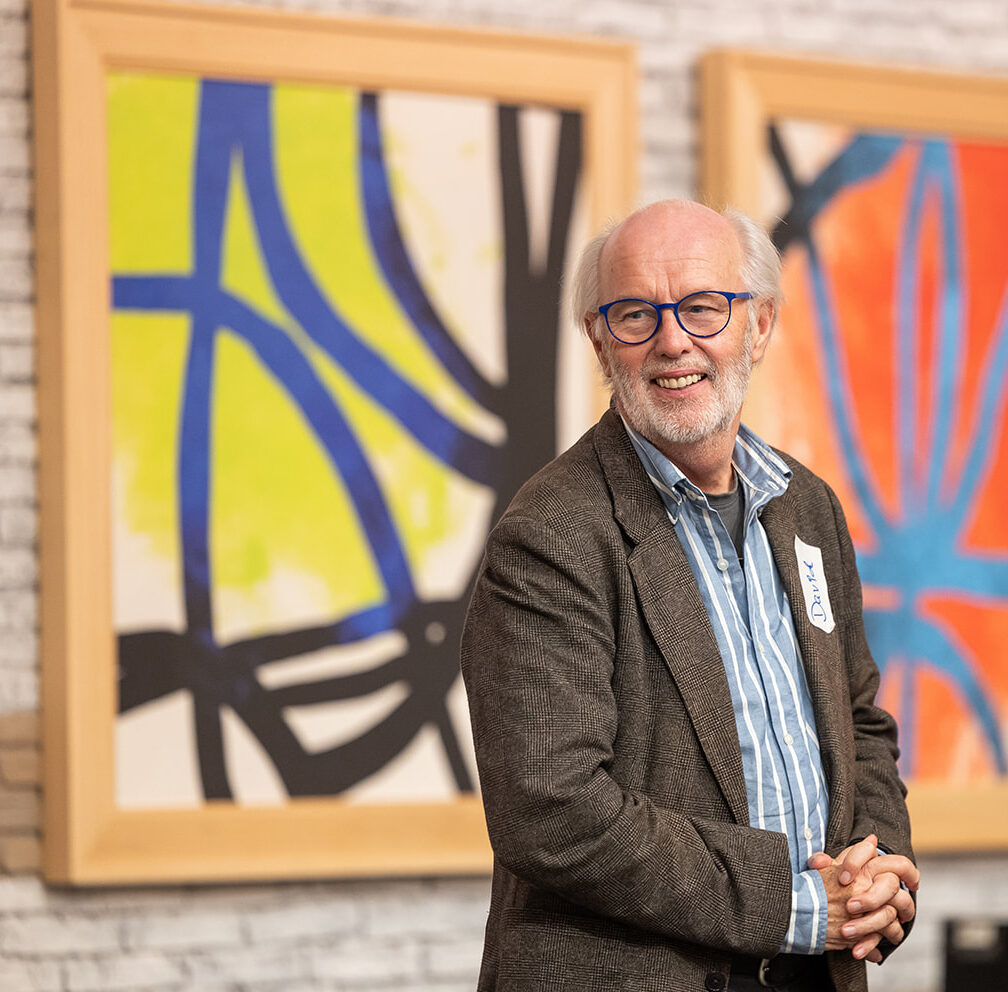
In December’s episode of the ‘People & Purpose’ podcast, Tarja Takko sat down with David Rigby, intercultural leadership expert, mentor, coach, and founding director of Smart Coaching & Training, to explore why the ability to connect across cultures has become a strategic superpower for modern leaders. With experience working in 22 countries and building teams across four continents, David brings decades of insight into how leaders can navigate cultural complexity with empathy, clarity, and impact.
David’s journey -from a mathematics degree at London University to a global career focused on people, leadership, and communication- has shaped a practical and deeply human approach to leadership. His reflections offer a roadmap for leaders and organisations operating in increasingly global, diverse, and interconnected environments.
A Lifelong Curiosity for Cultures
David’s interest in intercultural leadership didn’t begin in a boardroom—it started early, through friendships, languages, and a genuine curiosity about people’s backgrounds. From spending time with international peers at university to learning Italian and Spanish, his path has been shaped by an instinctive openness to cultures beyond his own.
That curiosity evolved into a professional focus as he began working across Europe, the Middle East, Asia, and Africa. Over time, David observed that leadership assumptions that work in one context can fail completely in another.
“If you’re leading people only in one country, you tend to operate in the culture of that country,” David explains. “Intercultural leadership means dealing with totally different and sometimes conflicting ways of working at the same time.”
Understanding Cultural Differences in Leadership
A recurring theme in the conversation is the danger of assuming that leadership looks the same everywhere. David contrasts leadership norms in Northern Europe, where autonomy and individual decision-making are expected, with cultures in the Far East, where hierarchy and top-down decision-making remain the norm.
The challenge for leaders is not choosing one style over another, but learning how to navigate both simultaneously without imposing their own cultural defaults.
“The biggest blind spot is expecting people all to behave the same way,” David notes. “They just don’t.”
Recognising these differences allows leaders to avoid misinterpretation and frustration, and instead respond with cultural intelligence.
Communication Beyond Words
Effective communication, David argues, is not about speaking more, it’s about ensuring shared understanding. Even when people technically speak the same language, meaning can shift dramatically depending on cultural context.
He illustrates this through familiar examples: how phrases like ‘that’s quite nice’ can mean very different things depending on whether you’re British or US American, or how indirect communication styles can mask disagreement in some cultures.
“Successful communication is when both people understand the same thing,” David reflects, “even if they’re coming from totally different viewpoints.”
This requires leaders to listen carefully, avoid assumptions, and actively confirm understanding especially in cross-cultural and remote settings.
Connection, Belonging, and Trust
In global and hybrid teams, creating a sense of belonging doesn’t happen by accident. David emphasises that connection requires intention, sincerity, and effort particularly when teams rarely meet face-to-face.
Rather than relying on surface-level checklists, leaders must invest time in understanding people as individuals, beyond their professional roles. Knowing personal context -interests, backgrounds, experiences- builds trust and strengthens collaboration.
“Ticking all the boxes doesn’t work,” David observes. “People have to know you’re being sincere about what you’re doing.”
Humility as a Leadership Practice
One of the most powerful moments in the episode comes when David reflects on humility as a core leadership quality. For him, intercultural leadership begins with recognising what you don’t know and being willing to learn continuously.
This applies not only across cultures, but across generations, disciplines, and experiences. Leaders must balance confidence in their own expertise with openness to being challenged.
“Am I humble enough to learn things?” David asks. “You have to know that you don’t know it all.”
Building Teams, Not Just Hiring Individuals
David also challenges traditional approaches to talent and diversity. While diversity is often discussed in terms of representation, he stresses the importance of team balance—including cognitive diversity, thinking styles, and emotional perspectives.
Recruiting the “best individual” is less important than building a team that can think, collaborate, and problem-solve effectively together.
“You can get results very fast with the wrong team,” David explains. “But they’ll be the wrong results.”
True inclusion, he argues, goes far beyond compliance as it requires leaders to actively create environments where different perspectives are genuinely valued.
Leading with Purpose Across Cultures
For David, purpose-driven leadership is inseparable from intercultural maturity. Leaders who want their organisations to thrive long-term must care not only about short-term results, but about the people and systems that sustain them.
This means balancing profitability with psychological safety, inclusion, and development especially in global contexts where expectations and norms differ widely.
“If you want to keep doing this in ten years,” David reflects, “then that’s what leadership has to be about.”
A Mindset for the Future
David Rigby’s insights highlight that intercultural leadership is not a skill to be mastered once, but a mindset to be practiced continuously. It demands curiosity, humility, courage, and a willingness to step outside comfort zones.
By listening deeply, communicating with intention, and valuing difference rather than fearing it, leaders can build organisations that are not only globally effective, but deeply human.
Watch the full episode below to hear the complete conversation and all of David’s insights on leading across cultures in a complex world.