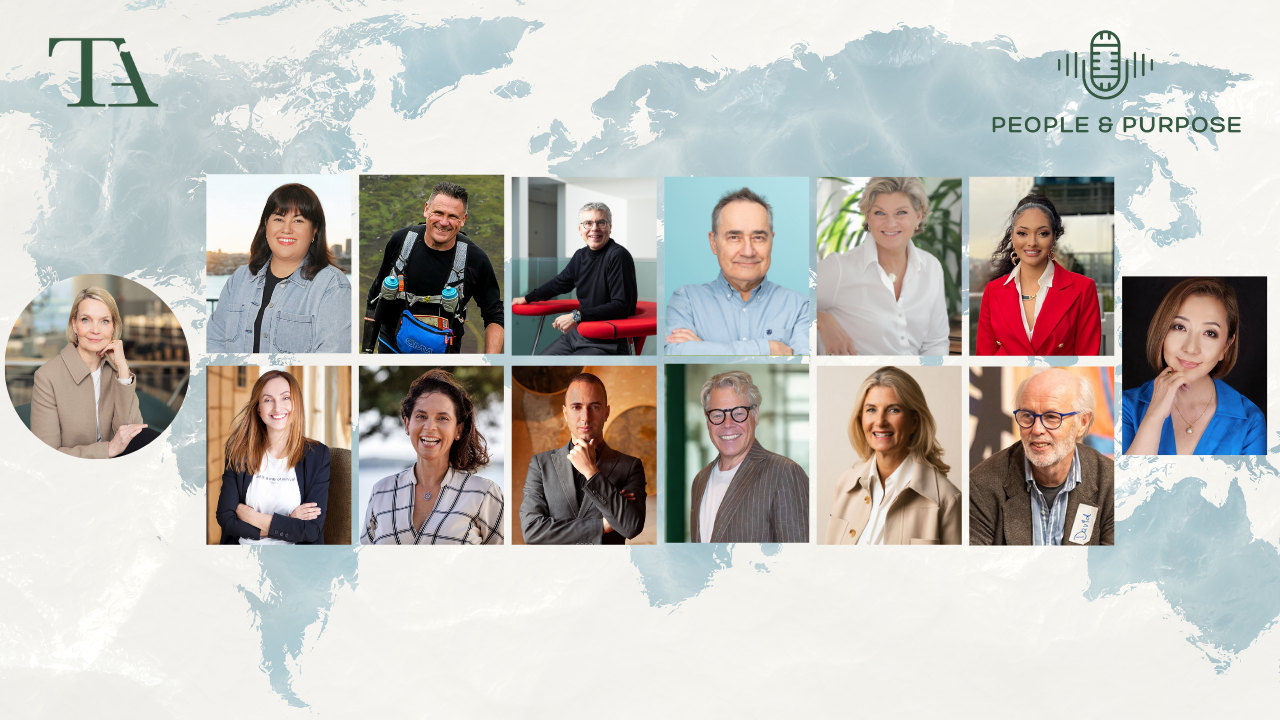
In a world reshaped by uncertainty, innovation, and shifting expectations, the role of leadership is undergoing one of its most profound evolutions in decades. In 2025, we launched our ‘People & Purpose’ podcast, hosted by Tarja Takko, CEO and Founder of Takko Advisory, set out to explore the human side of leadership across continents, industries, and lived experiences of purpose-led leaders.
A New Leadership Paradigm for 2025
Across its 12 monthly episodes plus 1 special episode, the podcast has created a compelling map of what modern leadership demands with insights ranging from adaptability and resilience to values, sustainability, and solution-focused leadership. Whether from the voice of an ultra-endurance athlete, a purpose-led executive search partner, a global diversity advocate, a solution-focused psychologist, or a committed philanthropist, a common thread emerges: leadership today is about people and purpose.
In more detail, across all insightful and content-rich episodes, a cohesive picture of modern leadership emerges:
Leadership is human.
It is grounded in empathy, authenticity, and real connection.
Leadership is purposeful.
Purpose guides decisions, inspires teams, and keeps organisations future-ready.
Leadership is resilient.
It embraces challenges with perspective and optimism.
Leadership is diverse.
Cultures, experiences, and perspectives enrich how we lead and collaborate.
Leadership is solution-focused.
It builds on strengths and success—not fear and failure.
Leadership is responsible.
It shapes not only companies, but communities and future generations.
Together, these conversations form a leadership playbook for today’s complex, interconnected world. And the message is clear: the future belongs to leaders who show up with courage, humanity, and purpose.
Takko Advisory is proud to support organisations and leaders on this journey. Reach out to us to start a conversation: tarja@takkoadvisory.com
A recap of all the 12+1 transformative interviews on the ‘People & Purpose’ podcast
This recap brings together the strongest insights from January to December 2025 with 12+1 episodes into a unified perspective on what it means to lead with humanity and impact. Read and explore the gems of each episode and see the red thread that has connected our guests around the world.
The early months of 2025 set the stage for a year of purpose-driven leadership. Across episodes, guests emphasized the importance of clarity, self-awareness, and alignment between personal values and organizational goals. A recurring theme was the power of connecting leadership with meaning—understanding why we lead, not just how. These foundational conversations laid the groundwork for exploring more specialized topics throughout the year, from diversity and sustainability to resilience, emotional intelligence, and navigating uncertainty.
January 2025: Embracing Adaptability and Purpose with Reianna Vercoe
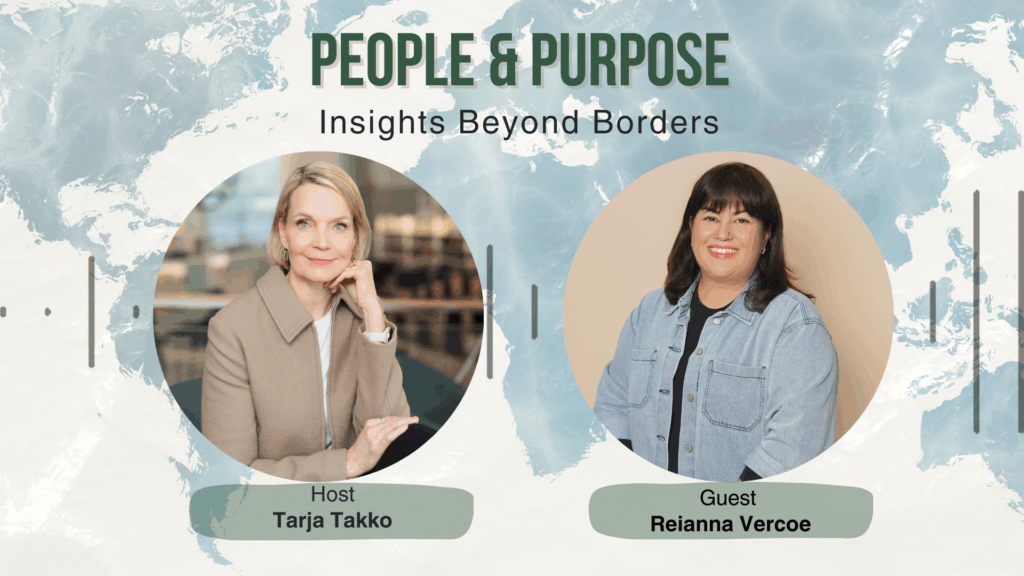
Back in January 2025, we opened the year with a powerful conversation between Tarja and Reianna Vercoe, an Australian leadership thinker whose multicultural lens mirrors the increasingly global nature of work today. Framing leadership as a “discipline with many parts”, the episode explored why adaptability, intentionality, and purpose must sit at the heart of the modern leadership agenda.
Adaptability as a non-negotiable
We no longer live in a world where adaptability is optional. Rapid technological change, hybrid work, and shifting social expectations mean leaders must foster learning cultures rather than compliance cultures. And this starts from the top.
When discussing remote and hybrid work, Reianna dismantled the myth of lower productivity:
“Remote work is often considered less productive, but this is based on a false measurement of productivity. As a leader, you have to put more energy into being intentional.”
Intentionality in communication, in expectations, and in ways of working has become the defining leadership muscle of flexible organisations.
Leading with purpose
Reianna reinforced that purpose is more than a strategy: it’s emotional connection.
“Purpose is about helping people understand what you’re doing, why you’re doing it, and to feel inspired and connected to that.”
Purpose gives direction when everything else is uncertain. It boosts engagement, fuels creativity, and anchors decision-making.
Diversity as a leadership advantage
With nearly 30% of Australians born overseas, Reianna emphasised that diversity is not abstract, it’s operational reality. Leaders must be culturally agile, curious, and inclusive. Diversity enriches collaboration, strengthens problem-solving, and fosters innovation.
Wellbeing as shared responsibility
The episode also spotlighted mental wellbeing. Leaders must normalise conversations around psychological safety and proactively check in—not just on deliverables, but on people. Because resilience and wellbeing are inseparable from performance.
Reianna’s episode set the tone for the year: leadership must evolve with empathy, adaptability, cultural awareness, and purpose at its core.
February 2025: Resilience and Courage with Chris Moon
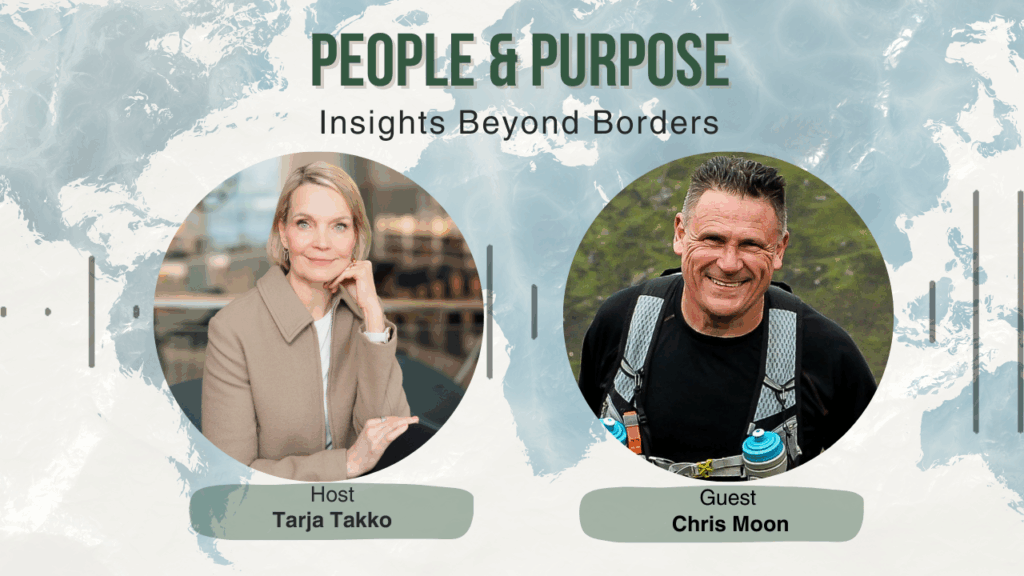
In February, Tarja welcomed Chris Moon, a globally respected keynote speaker, amputee ultra-marathoner, and survivor of capture by the Khmer Rouge. Few voices embody resilience like Chris’.
Redefining resilience
Resilience, Chris shared, is not endurance alone; it’s perspective.
“It’s very easy to focus on what’s wrong. Focus on what is right and what we can do, and the difference we can make.”
Resilience is the discipline of choosing the constructive lens, especially in adversity. It is also about knowing when to ask for help. An act he calls “a sign of strength, not weakness”.
Purpose-driven leadership
Drawing from military training, Chris embraces the motto “Serve to lead.”
“If we can’t lead ourselves, how can we lead others?”
Before guiding others, leaders must recognise their strengths, confront their weaknesses, and remove ego from the equation.
The culture people need
Chris noted that the biggest cause of workplace unhappiness is not workload—it’s lack of purpose and appreciation.
Purpose answers the ‘why’, while appreciation answers the human need to be seen. Combined, they create belonging.And belonging drives performance.
A commitment to positivity
One of Chris’ strongest messages was the power of positivity:
“Spread a little sunshine.”
In teams, positivity is not naïve; it’s catalytic. It shifts attention from obstacles to opportunities, enabling innovation and growth.
Adapting to change
Chris also underscored the need to embrace technological disruption (including AI) without losing sight of human values.
His episode left listeners with a challenge: to build futures where individuals and organisations don’t just survive change but thrive through it.
March 2025: Leading with Heart with Hervé Colleaux
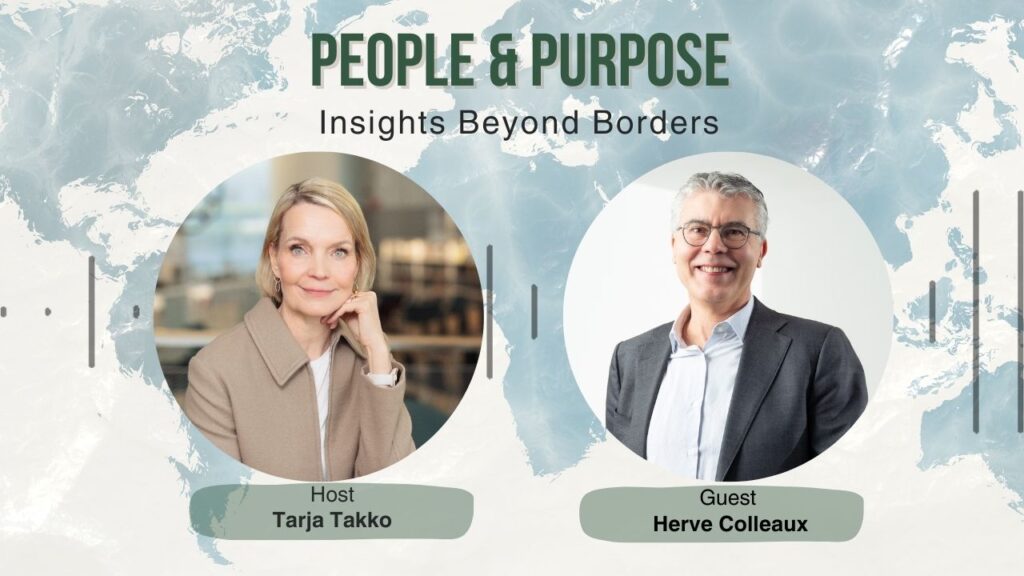
In March, Tarja hosted Hervé Colleaux, Partner at Borderless Executive Search and a purpose-led leader whose life across France, Belgium, the UK, and the Netherlands has shaped a deeply human approach to leadership.
Authenticity across cultures
Hervé’s multicultural experiences taught him that authenticity—and genuine human connection—is the foundation of leadership that works across borders. Borderless, the company he represents, places as much importance on values and leadership style as on expertise.
“We strongly believe that diversity is key. That’s part of our DNA.”
Leadership rooted in values
For Hervé, great leadership begins with clarity of values. When circumstances are challenging, values are the compass that holds everything together.
Leadership isn’t innate, he believes—it’s built. It can be learned, practiced, and refined. And its integrity is tested in moments of pressure.
The heart of sustainability
Borderless is notable for achieving an EcoVadis rating—a first in its industry. This accomplishment reflects Hervé’s belief that sustainability is far more than environmental initiatives: it is about long-term relationships, ethical decision-making, and cultures where people feel valued.
Kindness as strength
Hervé offered a powerful insight on kindness:
“Kindness is not being lenient. We must be demanding on performance, but respectful of the person behind the work.”
This balanced view reframes kindness not as softness, but as a disciplined, humane leadership principle.
Leadership as personal commitment
Hervé spoke openly about his dedication to his family, especially his daughters, and how leadership extends beyond the office. Purpose, for him, is lived both professionally and personally.
His message was simple and profound:
“It’s all about people.”
April 2025: A Solution-Focused Lens with Dr. Ben Furman
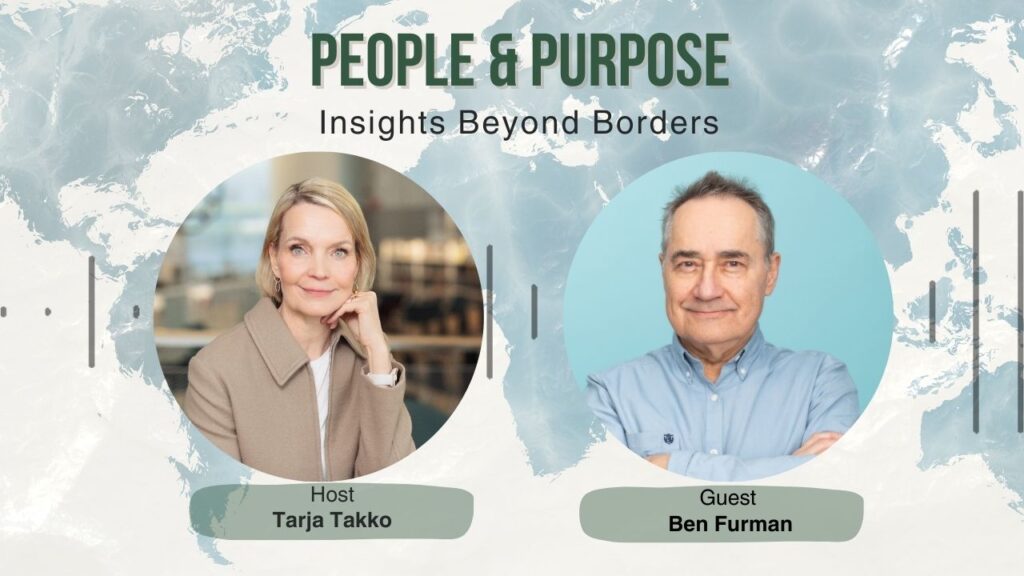
April’s episode with psychiatrist and global solution-focused practitioner Ben Furman challenged traditional organisational thinking. Instead of obsessing over what’s broken, Ben advocated for redirecting attention to what already works.
From problems to possibilities
Organisations often place disproportionate attention on problems—draining energy and morale. Ben offered a counterpoint:
“Happiness isn’t interesting to companies—but reducing the costs of burnout and turnover is.”
Solution-focused leadership is both human-centric and economically smart. And this is the core of Takko Advisory’s approach ‘Profit and Purpose’ can go hand in hand.
The power of success analysis
Ben encourages leaders to conduct “post-success analyses”—to unpack the mechanics of what went right, not just what went wrong.
Questions like:
“How did we achieve this?” “What strengths did we use?” “How can we replicate it?”
turn success into a repeatable pattern.
Imagination as a leadership tool
A key step in solution-focused work is envisioning the desired future. From there, teams can reverse-engineer the competencies needed—communication, feedback, conflict resolution, creative thinking.
The Double Star Model
Ben introduced this powerful framework combining the two elements below together that forms a model for healthy, high-performing workplaces:
- Appreciation: recognising strengths and contributions
- Competency Development: growing the skills that drive collaboration and effectiveness
Positive environments drive results
Ben described a famous study showing cows produce more milk when listening to music:
“Nobody buys music to make the cows happier; they buy it to produce more milk.”
The metaphor is clear: well-being and performance are intertwined. His message was bold and refreshing: the future belongs to organisations that choose to focus on strengths not just problems.
May 2025: Business with Purpose with Maria Ahlström-Bondestam
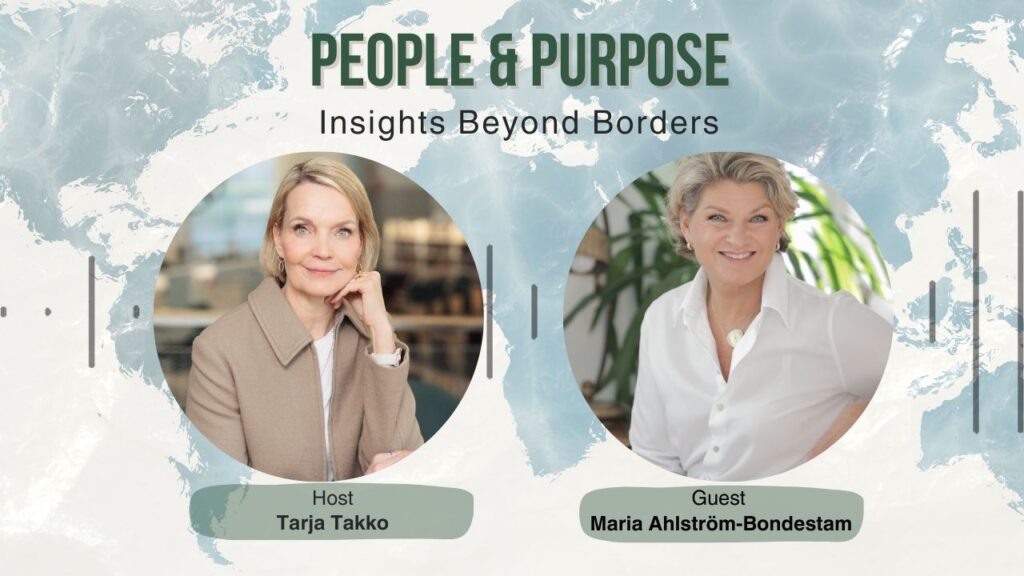
The May episode featured Maria Ahlström-Bondestam, philanthropist, UNICEF advocate, and co-founder of the Ahlström Collective Impact. Her life’s work bridges business excellence with social responsibility.
Courage as the foundation
Maria’s guiding value is courage:
“I try to have the courage to be the best version of myself within my reality.”
Her childhood story about writing to the President of Finland to fix a playground slide illustrates a lifelong truth: If something matters, you act.
Purpose-driven corporate responsibility
Maria emphasised that companies today have responsibilities far beyond profit. Social impact, children’s rights, and long-term sustainability must be integrated—not peripheral.
Her work with UNICEF and the Ahlström Collective Impact demonstrates how companies can systemically and strategically drive societal change.
Values as strategy
For Maria, values are not soft ideals—they are strategic assets. Courage, authenticity, and responsibility enable organisations to make decisions that drive both business value and social good.
Her core message: When companies act with heart and integrity, they can help build a more equitable world.
June 2025: Empowering Women and Youth: Insights on Gender Equality and Leadership with Zeycan Yildirim
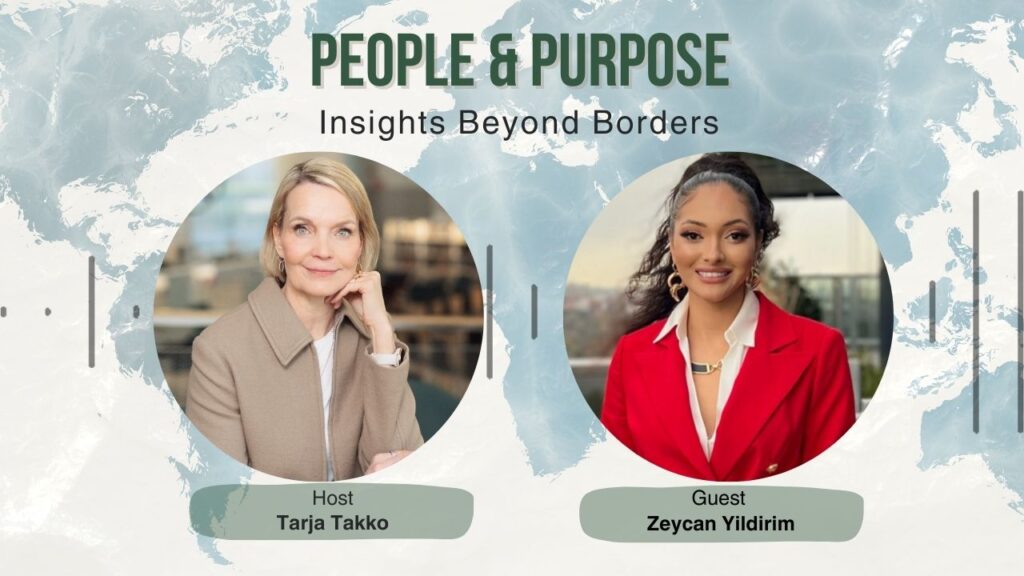
In June, Zeycan Yildirim joined Tarja to discuss gender equality and youth empowerment, highlighting how inclusive leadership fuels both societal progress and innovation within organizations. Zeycan emphasized the freedom for individuals to define themselves:
“It’s showing others that they don’t have to fit in a box to chase their dream — they can show up as themselves.”
True impact, she noted, goes beyond PR:
“Focus on true impact… companies should focus less on PR and more on impact.”
Grounded in empathy, Zeycan shared a personal philosophy:
“People are either loving, or they’re searching for love.”
“All of the hardships I’m going through are making it easier for someone else.”
Her insights underscored the importance of mentoring young leaders, supporting women through equitable policies, and leading with purpose and empathy.
July 2025: Leading with Alignment, Profit, and Sustainability: Insights by Laura Vargas
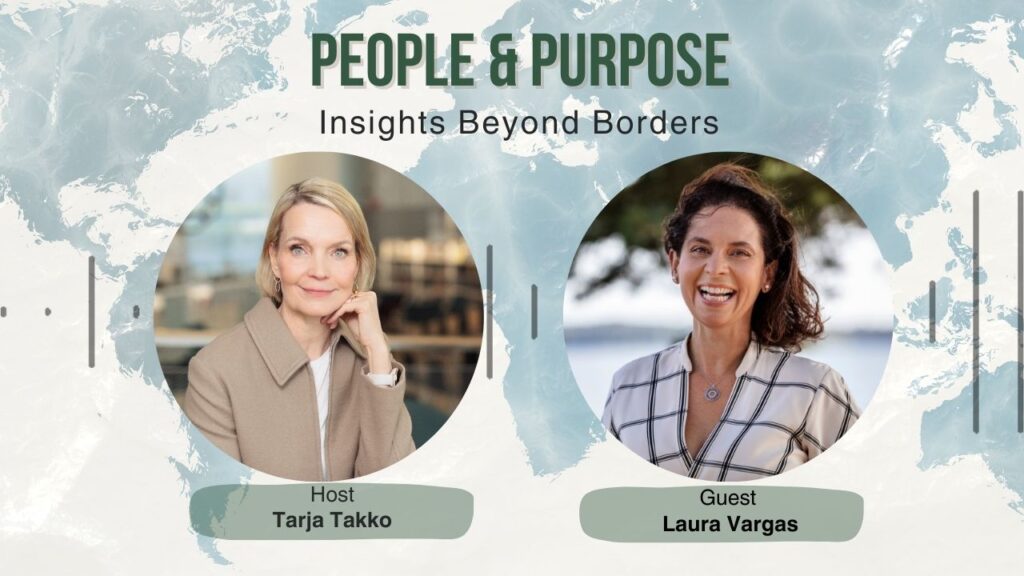
July’s episode with Laura Vargas explored the intersection of profit, sustainability, and purpose-driven leadership. Drawing inspiration from Costa Rica’s model of environmental stewardship, Laura highlighted the necessity of embedding purpose into organizational DNA:
“Profits are great, but it’s too small a metric for what we really need to be doing.”
“Leaders need clarity on their own purpose and how what they’re doing drives them to that purpose.”
Alignment between personal and corporate purpose emerged as a key driver of organizational success:
“The people who grow the most are those whose personal purpose aligns with the corporate purpose.”
Laura encouraged reflection on long-term sustainability:
“What we’re doing cannot continue. Our present has become unsustainable.”
By balancing profit with people and the planet, leaders can create strategies that are both regenerative and human-centered.
August 2025: Burnout, Balance & the Power of Authentic Leadership: Insights by Stella Rapti
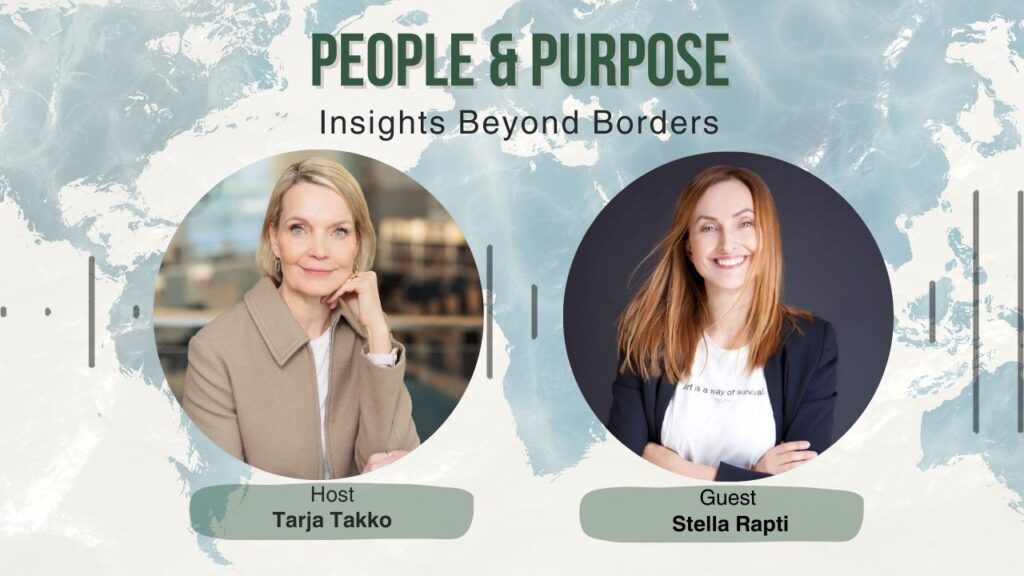
August’s episode with Stella Rapti confronted the realities of modern leadership: burnout, stress, and the quest for balance. Stella shared the early signs of burnout and the importance of addressing them proactively:
“I was starting to feel fatigue and cynicism — the early signs of my burnout.”
“Performance without presence is not sustainable.”
Authenticity and courage were recurring themes:
“Leadership is not about being perfect. It’s about being real.”
“Balance isn’t about splitting your time evenly — it’s about energy and attention.”
By redefining balance as a conscious allocation of energy rather than a rigid schedule, Stella encouraged leaders to make choices aligned with their values, ultimately fostering healthier teams and more resilient organizations.
September 2025: Emotional Intelligence: The Key to Purpose-Driven Leadership insights by Ricardo Cabete
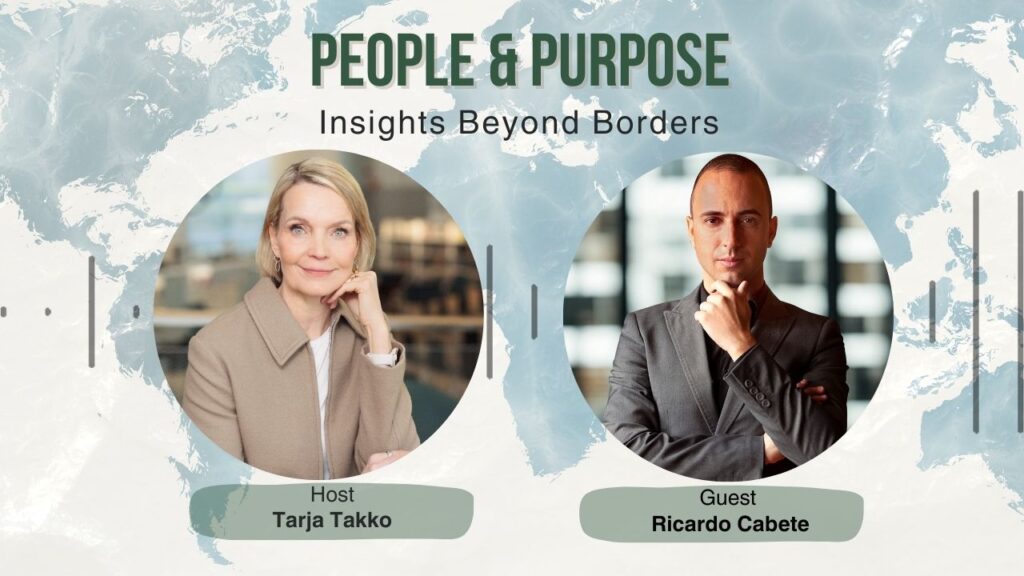
In September, Ricardo Cabete emphasized that emotional intelligence (EI) is no longer optional; it is a leadership superpower. He highlighted the shift from command-and-control to a ‘trust and inspire’ model:
“Emotional intelligence is the new superpower for leadership.”
“You can manage tasks, but you can only lead people.”
Setbacks, Ricardo explained, are opportunities for growth:
“Setbacks aren’t verdicts — they’re invitations to grow.”
Creating psychologically safe and appreciative workplaces ensures engagement and productivity:
“When employees feel heard, appreciated, and safe, performance follows naturally.”
The episode underlined the need for leaders to cultivate emotional fitness through reflection, empathy, and resilience, especially in hybrid work environments.
October 2025: Navigating Uncertainty and Being Future-Prepared insights by Michael Johansson
October’s episode with Michael Johansson focused on navigating uncertainty, embracing optimism, and preparing for multiple potential futures. He highlighted the difference between theory and practice:
“In theory you can write the perfect plan; in practice, everything changes.”
Leadership, Michael argued, is about inspiring people rather than controlling them:
“Management manages things. Leadership inspires people.”
Trust in oneself was central:
“Trust yourself — if you want to lead others, you need trust inside yourself.”
He emphasized a forward-looking mindset:
“Can we be future-prepared for multiple futures?”
By combining optimism, adaptability, and community-focused leadership, organizations can thrive even amidst uncertainty.
November 2025: Cultivating Change and Hope: Insights by Annika Sten Pärson
This episode with Annika Sten Pärson explored leadership through the lens of hope, mental health, and systemic change. Drawing from her personal journey and work in social innovation, she emphasized the importance of staying with complexity rather than rushing to solutions:
“I look at it as an opportunity to stay in the problem, because we have a tendency to very quickly look for solutions.”
For Annika, change is less about individual heroics and more about mindset and collaboration:
“You don’t walk around thinking you’re part of a movement. It’s very much a mindset — thinking about collaboration first.”
She highlighted how experiences of exclusion can become powerful drivers for inclusive leadership: “I have always carried with me a feeling of being excluded, and that has become a driver for change.”
Hope, she argued, is not naïve optimism but a necessary force for progress:
“Hope is the psychological fuel that allows individuals and societies to flourish.”
By placing mental health, belonging, and collective responsibility at the center, Annika underscored how leaders can cultivate meaningful change and sustain hope in uncertain times.
December 2025: Navigating the Global Leadership Landscape: Insights by David Rigby
December’s episode with David Rigby explored leadership through the lens of intercultural awareness, humility, and human connection. Drawing on decades of experience working across continents, David challenged the idea that good leadership automatically translates across borders. Instead, he highlighted that leading in a global context requires curiosity, adaptability, and the willingness to sit with difference rather than override it.
At the heart of intercultural leadership, David argued, is deep listening and the suspension of assumptions. As he put it, “You have to listen first — listen to what’s being said, what’s implied, and what’s not being said.” He emphasized that communication only succeeds when both parties truly understand the same thing, even if they arrive there from very different cultural or cognitive perspectives.
David also stressed that culture should never erase individuality. While national norms shape behavior, leaders must remain attentive to the person in front of them. “You’re dealing with individuals, not the culture,” he noted, reminding leaders that cognitive diversity exists everywhere and that effective leadership means adapting communication so others can receive it, not just hear it.
Humility emerged as a defining leadership quality in uncertain and multicultural environments. For David, maturity means holding confidence and openness at the same time. “Am I humble enough to learn?” he offered as a question every leader should ask themselves. Without humility, he warned, leaders risk imposing their own norms rather than building genuine connection and trust.
Ultimately, the conversation reinforced that intercultural leadership is not optional in today’s world — it is a responsibility. By leading with curiosity, empathy, and courage, David showed how leaders can create environments where difference becomes a strength, belonging becomes real, and collaboration across cultures drives lasting impact.
Special episode: Purpose, Courage and the Human Side of Leadership: Insights by Dr. Jenny Seder
This episode with Dr. Jenny Seder explored leadership through the lens of humanity, courage, and responsibility in complex global systems. Drawing from her journey across global HR leadership, humanitarian work with UNICEF, and large-scale organisational transformation, she emphasized that purpose is created through everyday leadership choices — especially when decisions are difficult and stakes are high:
“Behind every number, there is a human face. Leadership is about recognising that — even when the decisions are hard.”
For Jenny, leadership is not about control, but about care and accountability:
“You can hold high standards and still lead with compassion. The two are not in conflict.”
She highlighted the importance of giving voice to those closest to the reality of change, particularly young people and underrepresented perspectives:
“Sustainable solutions emerge when we truly listen to those affected, not just those in power.”
Hope, in Jenny’s view, is grounded in action rather than optimism alone:
“Hope is built when people feel seen, heard, and trusted to contribute.”
By placing dignity, inclusion, and long-term responsibility at the centre of leadership, Jenny reminded us that meaningful transformation begins with human-centred decisions — even in the most complex environments.
Common Threads Across 2025 Episodes
2025 has been a year of inspiring conversations on the People & Purpose podcast, hosted by Tarja Takko, CEO of Takko Advisory. From empowering women and youth to emotional intelligence, sustainable leadership, and future preparedness, each episode explored how leaders can show up with authenticity, empathy, and purpose in an ever-changing world. Here, we recap the highlights from the year’s episodes, weaving together the wisdom and insights shared by our incredible guests.
Across all 12+1 episodes from January through December 2025, several unifying themes emerged:
1. Purpose as the Core of Leadership
From Zeycan Yildirim to Michael Johansson, guests agreed that clarity of purpose is foundational. Leaders who understand why they act—and align this with their organization’s mission—create lasting impact.
2. Empathy and Emotional Intelligence
Stella Rapti and Ricardo Cabete reminded listeners that self-awareness, authenticity, and emotional intelligence are critical to guiding teams effectively. Leadership is not about perfection but about being present, vulnerable, and responsive.
3. Alignment of Personal and Organizational Values
Laura Vargas emphasized alignment between personal purpose and corporate mission as a multiplier for growth and innovation. This alignment increases engagement, fosters creativity, and strengthens culture.
4. Impact Beyond Metrics
Whether discussing gender equality, sustainability, or community engagement, guests encouraged focusing on meaningful impact rather than superficial metrics or PR wins. Zeycan Yildirim’s call to “focus less on PR and more on impact” echoes across all conversations.
5. Resilience and Adaptability
The importance of preparing for uncertainty and managing setbacks resonated across episodes. Leaders are called to embrace challenges as growth opportunities, as Ricardo Cabete and Michael Johansson both highlighted.
6. Community, Connection, and Collaboration
All guests stressed that leadership is relational. Michael Johansson and Zeycan Yildirim emphasized the value of nurturing safe, inclusive communities where people feel empowered to contribute and grow.
7. Staying with Complexity and Leading Through Uncertainty
Annika Sten Pärson and David Rigby both emphasized that meaningful change rarely comes from quick fixes. Leaders are increasingly required to stay with complexity, resist oversimplification, and hold space for uncertainty. Rather than rushing to solutions, they highlighted the value of reflection, dialogue, and sense-making — especially in complex, intercultural, or systemic environments. This patience creates better decisions, deeper trust, and more sustainable outcomes.
8. Human-Centred Leadership in High-Pressure Systems
Jenny Seder’s insights, echoed across many episodes, reinforced that leadership is ultimately about people — even in the most data-driven, high-stakes contexts. Whether navigating humanitarian work, corporate transformation, or ownership change, guests consistently reminded us that behind every decision, metric, and strategy are human lives. Leading with care, dignity, and accountability is not a soft alternative to performance; it is a prerequisite for lasting impact.
9. Dialogue as a Catalyst for Trust and Change
From David Rigby’s intercultural leadership lens to Annika’s emphasis on collaboration and Jenny’s focus on listening, dialogue emerged as a core leadership capability. Across cultures, sectors, and roles, guests highlighted that trust is built through genuine listening, inclusive conversations, and the courage to engage with differing perspectives. Leadership today requires creating safe spaces where dialogue can transform tension into progress.
A Year of Lessons for Leaders
2025’s People & Purpose episodes provided a roadmap for leading with integrity, empathy, and foresight. From empowering women and youth to navigating burnout, fostering emotional intelligence, and preparing for the future, the insights shared by our guests reflect a unified truth: leadership is about impact, connection, and purpose.
What emerges from the People & Purpose 2025 journey is not a collection of abstract leadership ideals, but a clear call to action. Across all 12+1 conversations, one truth stands out: leadership today is less about having the right answers and more about creating the right conditions where people can think clearly, act responsibly, stay connected to purpose, and perform sustainably in the face of uncertainty. This is where leadership becomes deeply practical.
Human-centric leadership is not about being “nice.” It is about making better decisions, building healthier systems, and enabling organizations to endure and grow over time. It requires leaders to:
- Redesign cultures that support autonomy, trust, and accountability
- Align purpose, strategy, and everyday behavior
- Lead transformation with clarity, courage, and care
- Balance performance demands with human sustainability
- Stay grounded in values while navigating complexity and change
At Takko Advisory, these themes are not theoretical. They sit at the heart of how we partner with organizations and leaders whether supporting large-scale transformations, stepping into interim CHRO or transformation leadership roles, designing purpose-driven CSR strategies, or working closely with CEOs and leadership teams on culture, leadership, and change.
As we launch the next series of People & Purpose: Rethinking Leadership conversations in January, we look forward to continuing this dialogue with new voices, fresh perspectives, and the same shared commitment on profit with purpose.
Organizations that invest in people, purpose, and leadership capability do not only create better workplaces; they build resilience, trust, and long-term value for all stakeholders — owners, employees, customers and communities.